Every Hour Spent on a Slow Portal Is an Hour Stolen From a Student

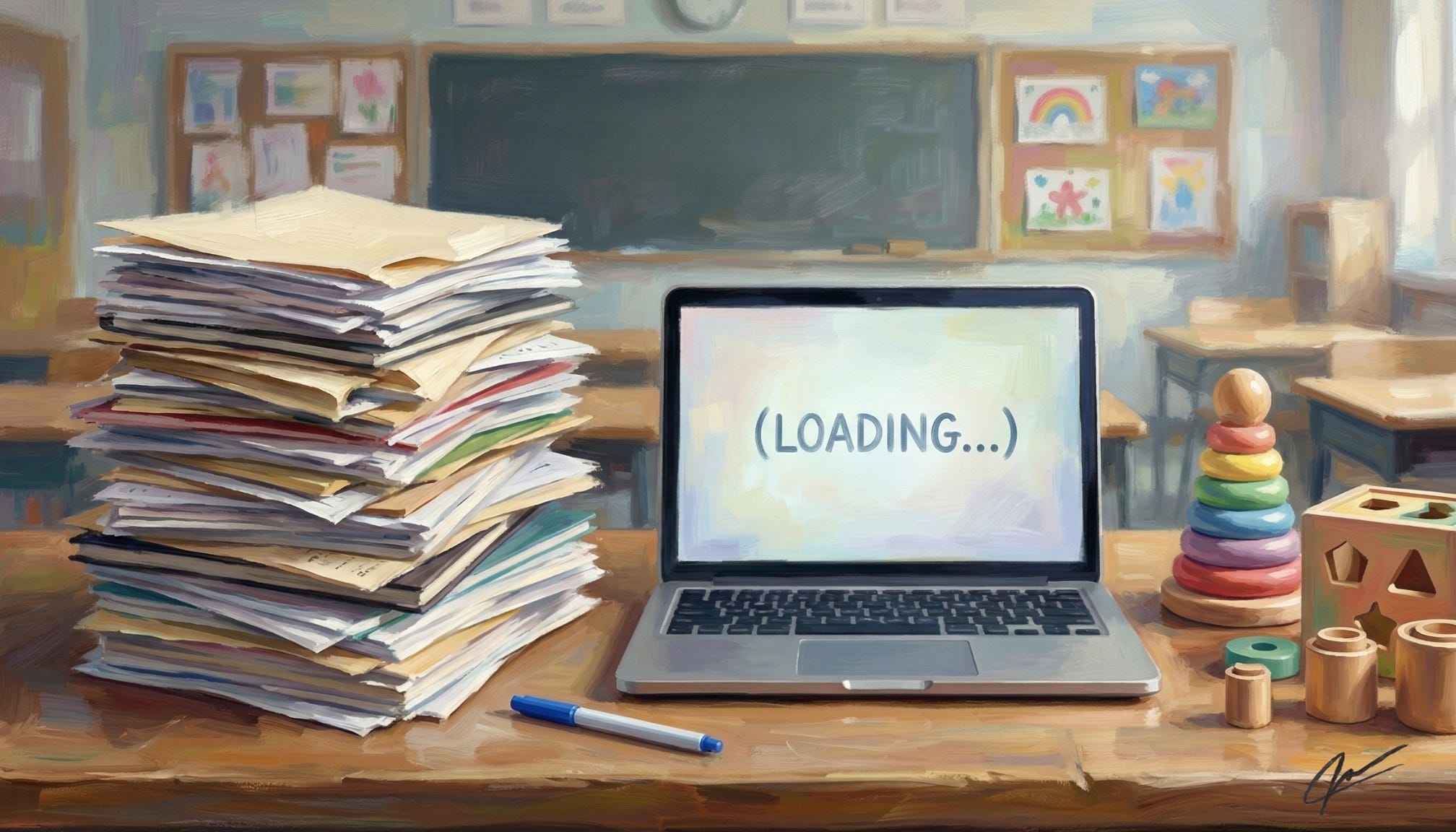
It's 4:30 PM. The classroom is finally quiet.
But your work isn't done.
Instead of refining tomorrow's lesson or reflecting on a breakthrough you had with a student, you are staring at a glowing screen.
You are spending the next two hours manually typing numbers from a stack of paper rubrics into a clunky, endlessly loading school portal.
On the other side of that portal is a school administrator, or perhaps a government compliance officer, waiting for those numbers.
They need that data to make high-level decisions, secure funding, and measure progress.
That need for measurement is a necessary piece for our system.
But you are caught right in the middle…
You are acting as the manual bridge between two disconnected gears, absorbing all the friction of a broken process.
If that feels exhausting, I want to validate that feeling: it is exhausting.
The easy answer is to blame leadership for wanting too much data, or to blame teachers for avoiding administrative work. But that is the wrong diagnosis.
The real problem is that we are completely ignoring the opportunity cost.
We are drowning our frontline capacity to pay for boardroom metrics.
Think about it like a scale.
Every time government or leadership decides we need a new metric, a new rubric, or new reporting software, they usually only see the benefit: better data.
But the cost is paid entirely by the teachers.
Because most school software is heavily disconnected, the burden of data entry falls entirely on the frontlines.
Every hour an educator spends fighting a slow interface is an hour stolen from their craft. It is an hour they cannot spend iterating on a lesson plan, mentoring a struggling student, or simply resting.
We might end up with a beautiful dashboard for decision-making, but we are actively sacrificing the very quality of education we are trying to measure.
We have to stop treating our most valuable, highly-trained professionals like administrative clerks.
In 2026, forcing a human being to move grades from paper into a digital void isn't a necessary evil. It is a failure of leadership and technology.
If we need the data, the tools must talk to each other. We must automate the administrative "recipe" so educators can get back to the "art" of their profession.
And the data itself? We need to change the way it flows.
Right now, data collection feels like a tax on the teacher's time because it only travels up to the government or the administrators.
It needs to travel back down to the classroom.
If a system requires an educator to input data, that system should immediately buy back their time by helping them identify trends, group students for interventions, or adjust their pacing.
If the tool doesn't serve the person using it, it will always be a source of resentment.
Balancing the need for institutional data with the sacred craft of teaching is one of the hardest leadership challenges we face today.
It takes courage for administrators to push back against bloated compliance requirements and say, "We will not implement this until we have figured out how this system will not steal our teachers' time."
It requires the courage to dismantle clunky portals and invest in true integration.
But, if we actually protect our teachers' bandwidth, if we trust them with the time we buy back, they will use it to elevate their craft.
Keep your eyes on the North Star.
We didn't become educators to spend our lives moving grades into a painfully slow system.
We are here to move worlds.
— Mau