My thoughts on Education: You can’t break the sound barrier with a horse.

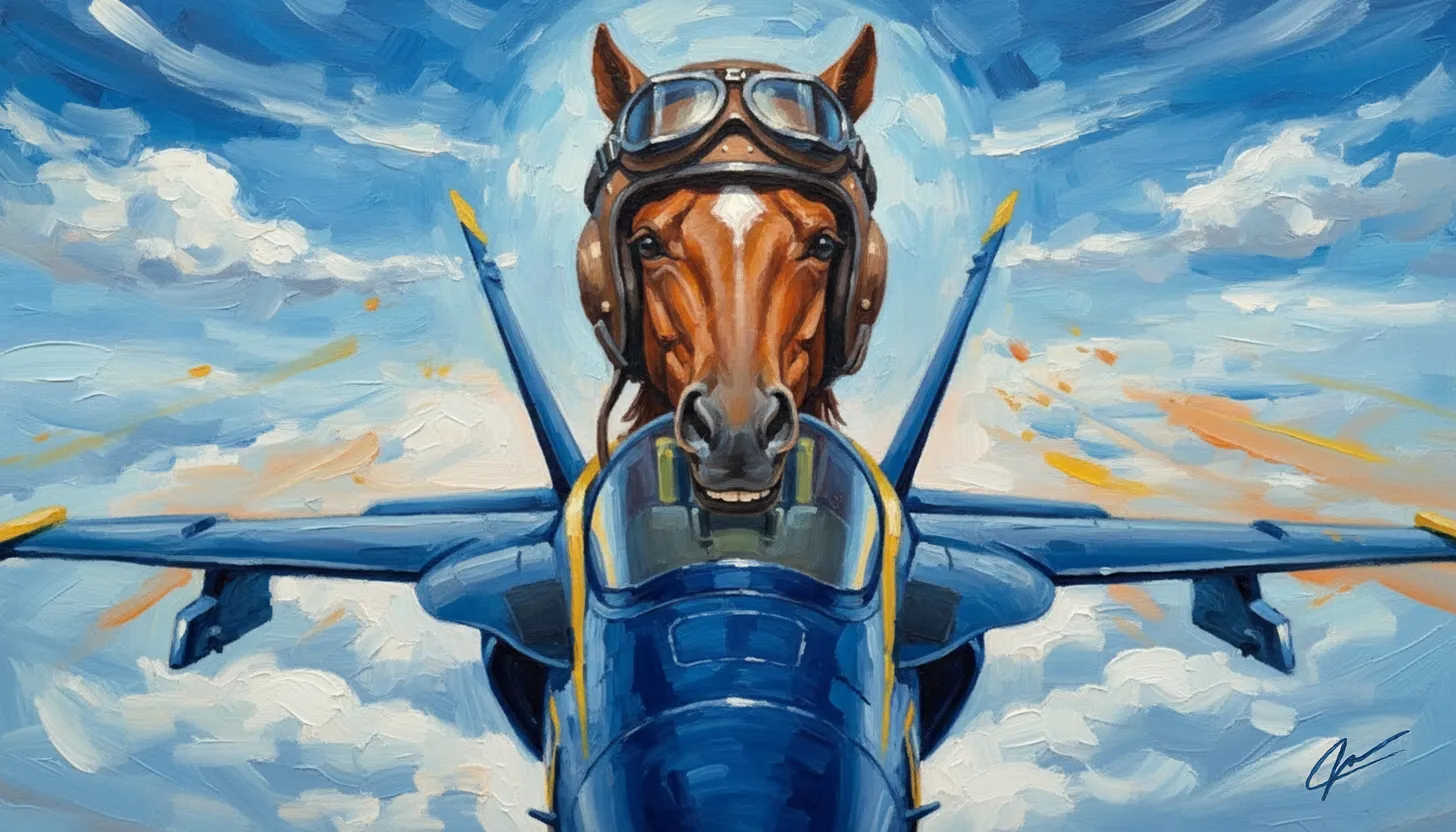
Why we are stuck trying to optimize a system that needs to evolve.
I was recently looking at a curriculum from the 1950s and comparing it to one from today. The font had changed. The textbooks were now iPads. The classrooms had “smart boards.” But the fundamental mechanic—the way the gears turned—was exactly the same.
We are currently witnessing a global burnout among educators, parents, and students. If you feel like the education system is grinding against you, if you feel like no matter how much effort you pour in, the output doesn’t match the input….
I want you to know something important.
If this feels hard, it’s because it is.
You are exhausted because you are trying to push a heavy object uphill.
You are trying to force a system designed for stability to navigate a world defined by chaos.
But here is the diagnosis: The problem isn’t that the system is broken. The problem is that the system is obsolete.
We are caught in a trap of Optimization vs. Evolution.
We spend billions of dollars, endless policy meetings, and sleepless nights “oiling the horse.” We want the horse to run faster. We give it better oats (more funding). We give it lighter shoes (better tech). We train the jockey (teacher development).
But deep down, you know the truth: You cannot break the sound barrier with a horse. It doesn’t matter how well you optimize it. If you want to break the sound barrier, you have to stop fixing the horse and start building the jet.
Here is how we shift the gears from fixing the old machine to designing the new one.
1. Stop confusing “Schooling” with “Learning”
The 19th-century model (the horse) was built for the industrial assembly line. It was designed to produce compliant workers who could perform repetitive tasks for 40 years. It was a system based on Standardization.
The world of 2025 and beyond requires the opposite. The economy doesn’t reward compliance; it rewards Creativity, Critical Thinking and Problem Solving.
We must stop asking, “How do we make students better at school?” and start asking, “How do we make students better at life?”
When we focus on “schooling,” we optimize for test scores. When we focus on “learning,” we optimize for adaptability.
We know that in the real world, there is no answer key.
2. Move from “Just in Case” to “Just in Time”
The old gear was built on “Just in Case” information. Memorize this date, just in case you need it. Learn this formula, just in case.
In an era where all human knowledge is accessible in three seconds via the device in your pocket, memorization is a rusty gear. It creates friction.
We must pivot to “Just in Time” learning. This is how the real world operates. You encounter a problem, you locate the resources to solve it, and you apply the solution.
- The Old Way: Memorize the map.
- The New Way: Learn how to navigate.
We need to teach the skill of Wise Judgment—how to filter information, verify truth, and synthesize ideas. That is the engine of the jet.
3. Embrace the “Unique Gear”
In a clock, if you try to file down a unique gear to make it look like all the others, the clock stops. Yet, our education system tries to file down every student to fit a standardized mold.
True leadership understands that humans are not standardized parts. The $3.72 check I once received from Fiverr after working long hours taught me more about economics and value creation than any textbook ever did because it was my experience. It was specific to my journey.
We must make the curriculum adaptable. We need to allow students to find their specific “Gear”—their obsession, their talent, their curiosity—and let them spin it as fast as they can through expert-led guidance.
A student obsessed with video games shouldn’t just be told to stop playing; they should be learning the physics engine behind the movement, the storytelling structure of the campaign, and the monetization model of the industry.
Faith & Courage
Transitioning from the horse to the jet is terrifying. The horse is safe. We understand the horse. We have ridden it for centuries.
To build the jet requires Courage. It requires the courage to say, “This old way doesn’t serve us anymore,” even when the old way is all we know.
It requires the courage to face the difficult challenge of leaving behind what is obsolete.
But it also requires Faith. Faith that if we let go of the reins of control and standardization, our children will not fall—they will fly. Faith that the human mind, when unencumbered by outdated systems, is capable of brilliance we haven’t even seen yet.
Don’t polish the past. Build the future.
— Mau